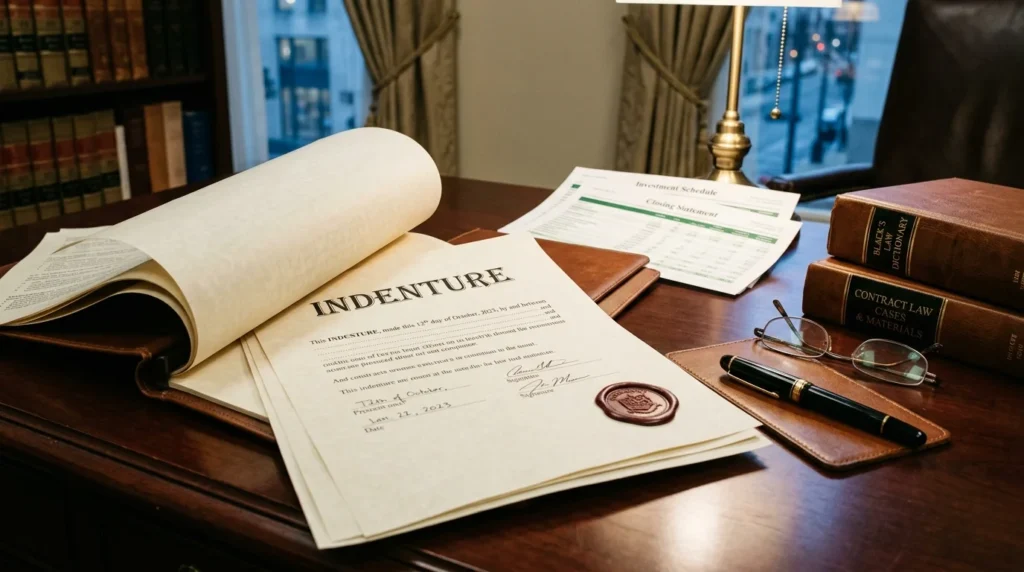


The first thing you hold is thin: a petition, a signed consent, and a stamped receipt from the county clerk. Months later you hold something heavier, a decree carrying a judge’s signature and a raised seal. Adoption papers are what fill the gap between those two moments, filed in a fixed order, by named people, on real deadlines. Also worth reading: Ohio WARN Notices.
Short answer: you file a petition in your county family court, attach every required consent, and submit a completed home study. You then clear interstate approval, wait out the revocation window, attend a short hearing, and collect the final decree. An amended birth certificate arrives a few weeks after that.
Key takeaways
- Adoption papers are not one form. They are roughly eight documents, signed by four different people, filed across six to eighteen months.
- The petition starts the case. The decree ends it. Nothing in the middle is optional.
- A signed consent can still be pulled back for a set number of days, and that number is written into each state’s statute.
- Your decree is a court record. Schools and passport offices ask instead for the amended birth certificate.
- Filing fees usually run $150 to $400. Home study fees are the larger line item, commonly $1,500 to $3,000.
What you need in hand before you file
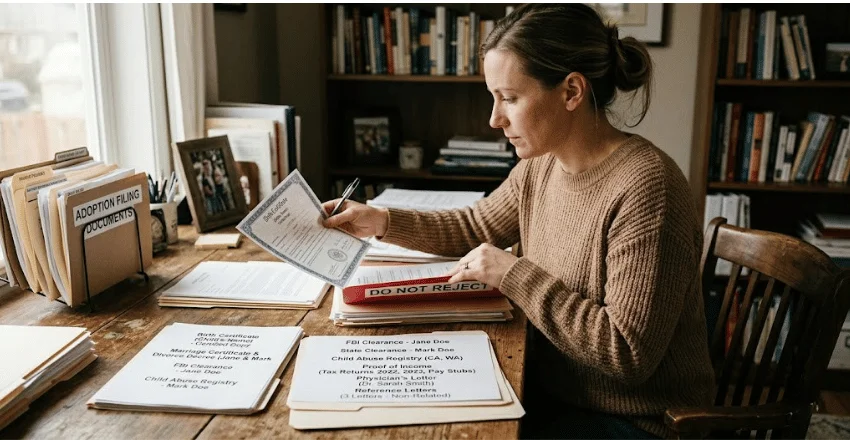
Clerks reject incomplete filings, and a rejected filing costs weeks. Pull these together first:
- Certified copies of the child’s original birth certificate
- Your marriage certificate, plus any divorce decree that ended a prior marriage
- State and FBI background check clearances for every adult in the household
- Child abuse registry clearances, one per state you have lived in recently
- Proof of income, usually two years of tax returns and recent pay stubs
- A physician’s letter confirming you are healthy enough to parent
- Three or four reference letters from people who are not related to you
The document checklist: what each form is and when it is due
| Document | Who files or signs it | When it is due |
|---|---|---|
| Home study report | Licensed social worker or agency | Before placement, or before filing in a stepparent case |
| Consent to adopt, or relinquishment | Each legal parent | After birth, once the state’s waiting hours have passed |
| Petition to adopt a minor | The adopting parents, through counsel | Once consents are signed and the revocation window has closed |
| Notice of hearing and proof of service | Petitioners or the clerk | Within days of filing, before the hearing can be set |
| ICPC Form 100A | Sending state’s compact office | Before the child leaves the birth state |
| ICPC Form 100B | Receiving state’s compact office | On arrival, and again at finalization |
| Post-placement supervision reports | The supervising agency | Monthly or quarterly, for three to six months |
| Final decree of adoption | The judge signs, the clerk enters it | At the finalization hearing |
| Certificate of adoption for vital records | The clerk, sent to the state registrar | Within 30 days of the decree |
How to file adoption papers, step by step
- Confirm the court. Call the clerk in the county where you live and ask which division hears these cases. Some states use probate court; others use family or juvenile court.
- Book the home study. Hire a licensed agency or an independent social worker approved in your state, and expect two to four visits.
- Order your background clearances. Fingerprints take a few weeks to come back, so start them the same week you book the study.
- Collect written consent from every legal parent. That includes a father who has registered with the putative father registry, whether or not he is on the birth certificate.
- Let the revocation period run out. Do not schedule a hearing inside that window, because a withdrawn consent voids the filing.
- File the petition and pay the fee. Your clerk assigns a case number and seals the file the moment it opens.
- Serve notice on anyone entitled to it. A missed party is the single most common reason a judge continues a hearing.
- Clear the interstate paperwork. If the child was born in another state, nobody travels home until Form 100A comes back approved.
- Host the post-placement visits. Your supervising worker writes a report after each visit, and the judge reads every one.
- Attend the finalization hearing. It usually lasts fifteen minutes, and the judge signs the decree from the bench.
- Order certified copies and apply to vital records. Ask the clerk for four certified copies before you leave the courthouse.
Most families do not walk this alone. A family law lawyer handles the filings that a clerk will otherwise bounce, and in contested cases, that representation is what keeps the timeline from doubling.
The consent window everyone underestimates
Signing is not the end of the birth parent’s decision. Every state builds in a period during which that signature can be withdrawn, and the length varies wildly. Per the text of North Carolina General Statutes 48-3-608, published by the North Carolina General Assembly, a parent gets 7 days to revoke consent. That count includes weekends and holidays. If day seven lands on a court closure, the window stretches to the next business day.
Other states run shorter or longer. Some treat the signature as irrevocable the moment a judge accepts it. A few allow withdrawal any time before the decree is entered, which is why hurrying a hearing is bad strategy. Ask your attorney for the exact statute number, not a summary, and read it yourself.
Where the requirements change from state to state
The stack looks similar everywhere. Rules around it do not. Four things move:
- When consent can be signed. Some states allow it hours after birth. Others impose a wait of 72 hours or more.
- Who must consent. Putative father registry deadlines range from a few days after birth to any time before the petition is filed.
- Whether a home study is waived. Many states waive it for a stepparent or a grandparent, though a background check still applies.
- How long supervision lasts. Three months in one state, a full year in another, with a report due at each interval.
Filing under the wrong state’s rules is not a paperwork error you can amend later. It restarts the case.
Stepparent, relative, and adult adoptions carry a lighter stack
A stepparent case skips placement entirely, since the child already lives with you. What it does not skip is termination of the other legal parent’s rights, either by consent or by a contested motion showing abandonment. That is the whole fight in most of these cases.
Where a custody order from an earlier case is already in place, the terms of that order shape what you have to prove. Reviewing it with the attorney who handled your divorce is faster than starting cold, because the file already holds the support records a judge will want.
Adult adoptions are the shortest version of all: a petition, the adoptee’s own consent, and a hearing. No home study, no supervision, no agency.
Crossing a state line or a border
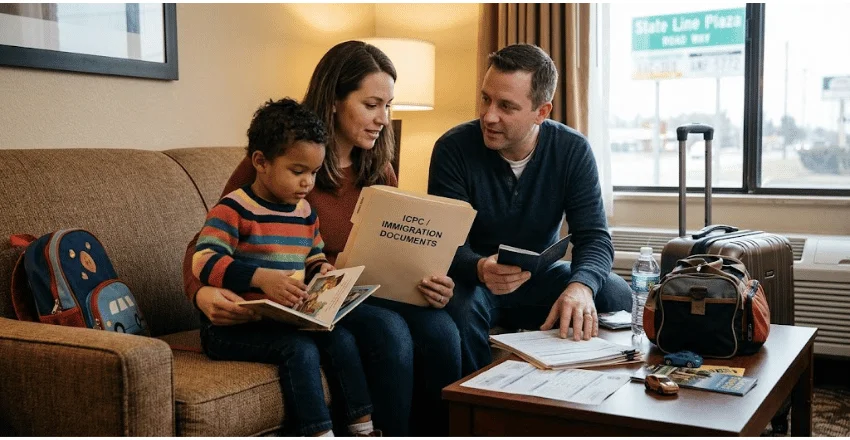
Move a child between states before placement, and the Interstate Compact governs it. The sending state’s office reviews Form 100A and approves travel; nothing moves until that approval lands, and a wait of one to three weeks in a hotel is normal.
International cases add a second government to satisfy. Beyond the court file, you are assembling a visa petition, a Hague adoption certificate, and immigration approval for the child to enter the country. Families already working with a visa and immigration attorney often keep that same counsel on the file, because the deadlines interlock with the court’s.
What the paperwork actually costs
Break the number apart before you budget. Court filing fees sit between $150 and $400 in most counties. A home study runs $1,500 to $3,000, and post-placement reports add $500 to $1,500. Attorney fees for an uncontested stepparent case commonly land between $2,500 and $5,000. Certified copies of the decree cost a few dollars each, and the amended birth certificate is usually under $50. Federal law also gives adoptive families a tax credit, so keep every receipt.
Getting a copy of your adoption papers years later
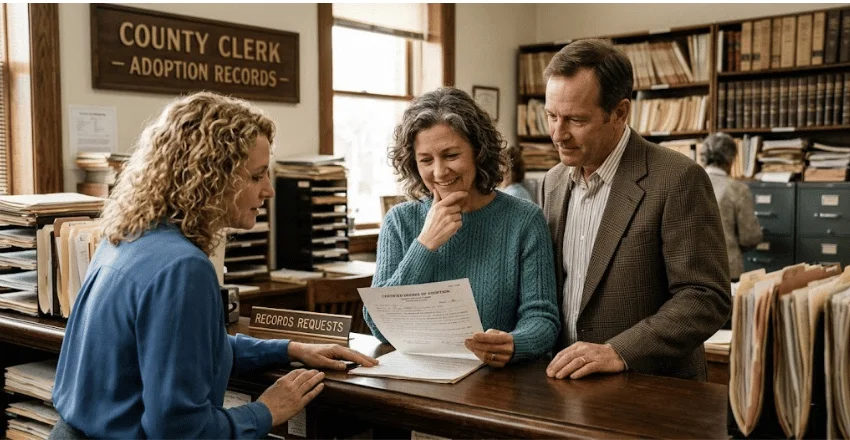
Two different records exist, held in two different places. The decree lives with the clerk of the court that entered it, and a certified copy is a routine request with proof of identity. Most states seal the full case file, and opening it takes a court petition showing good cause, medical need, or a match through a mutual consent registry.
Access rules have loosened. More than a dozen states now release an original birth certificate to an adult adoptee on request. Start with the vital records office in the state of birth, then the court, then the placing agency.
Your next step
Pull the checklist above, mark what you already have, and call the clerk in your county to confirm which forms their bench uses. Then bring that list to a family law attorney in your state for a filing review. One hour spent on the order of these documents saves months of continued hearings.
Frequently asked questions
Six to twelve months for a stepparent case, and twelve to twenty-four months when an agency and interstate approval are involved.
No state accepts a binding consent signed before birth. Some allow a pre-birth acknowledgment that carries no legal weight on its own.
Yes. Your state registrar issues an amended certificate naming you as parents, and seals the original.
Courts allow service by publication after a documented diligent search, then proceed without that parent.
Several states require one for any private placement, and every state requires one where rights are contested.