


Divorce is a challenging and often emotional process. When spouses cannot agree on key issues such as child custody, property division, or spousal support, the situation becomes a disagreement divorce. Unlike an uncontested divorce, where both parties mutually agree on all terms, a Disputed Divorce involves disputes that require resolution through negotiation, mediation, or court proceedings.
These cases are typically more complex, time-consuming, and expensive, often necessitating the guidance of an experienced divorce attorney. This comprehensive guide explores the meaning of disagreement divorce, the associated costs, the legal process, hearings, how to find a lawyer near you, and a detailed comparison with uncontested divorce, with a focus on Texas law.
It aims to equip spouses with the knowledge needed to navigate the process effectively and protect their rights while pursuing a fair resolution.
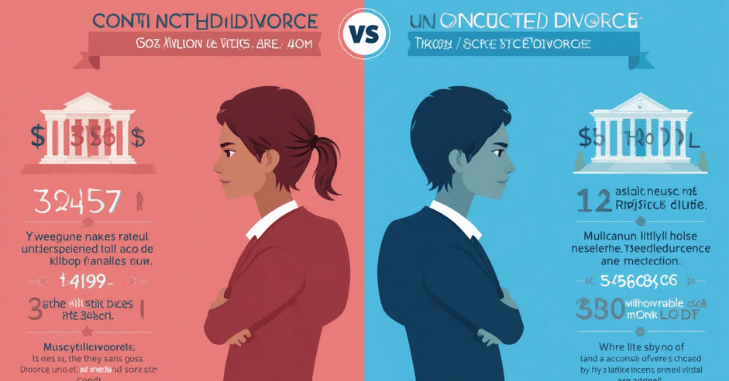
| Aspect | Contested Divorce | Uncontested Divorce |
| Agreement Between Spouses | No agreement on one or more issues | Complete agreement on all issues |
| Timeframe | Often several months to years | Usually 1–3 months in Texas |
| Cost | Higher due to attorney fees, court costs, and expert witnesses | Lower, minimal court fees and attorney hours |
| Court Involvement | Frequent hearings, possible trial | Limited court involvement, mainly to approve paperwork |
| Complexity | High; multiple issues may require evidence and legal arguments | Low; straightforward filing process |
| Stress Level | High conflict and prolonged litigation are common | Lower; cooperation reduces emotional strain |
| Attorney Involvement | Essential for navigation, negotiation, and trial representation | Optional; usually for review of agreements or paperwork |
| Property Division | The court determines fair distribution if the parties disagree | Parties mutually agree on property and debt division |
| Child Custody & Support | The court decides if the parties cannot agree | Parties mutually agree on custody and support arrangements |
| Use of Mediation | Often required before trial to attempt resolution | Rarely needed, as parties already agree |
What Is a Litigated Divorce? Meaning and Definition
A Disputed Divorce occurs when spouses are unable to agree on one or more critical aspects of ending their marriage. Common issues in disagreement Divorces include child custody and visitation, child support and alimony, division of marital property, allocation of debts, and other financial or personal disputes.
Because the parties cannot reach a mutual agreement, the court must intervene to resolve these issues. As a result, Disputed Divorces generally take longer to finalize than unlitigated Divorces, which are simpler and can be completed through mutual consent without extensive court involvement.
Contested Divorce in Texas
Texas is a community property state, which means that most property and debts acquired during the marriage are considered jointly owned and must be divided fairly, though not necessarily equally. Key aspects of Disputed Divorce in Texas include:
- Residency Requirements: At least one spouse must have lived in Texas for six months and in the county where the divorce is filed for 90 days.
- Property Division: Courts divide community property based on fairness, taking factors like income, health, and earning potential into account.
- Child Custody and Support: Texas courts prioritize the child’s best interests, considering factors such as parental fitness, living arrangements, and the child’s needs.
- Spousal Support (Alimony): Only awarded in certain situations, such as when a spouse lacks financial resources post-divorce or has a disability.
Texas disputes can involve multiple hearings, mandatory mediation, and court trials if disputes are not resolved through negotiation.
The Cost of a Disagreement Divorce

The cost of a Litigated Divorce can vary widely depending on the complexity of the case, the attorney’s experience, and the state or county in which the divorce is filed. In Texas, attorney fees are a significant factor: most divorce lawyers charge hourly rates between $150 and $500, and complex contested cases often can cost from $10,000 to $50,000 or more.
Filing fees in Texas typically range from $300 to $350, depending on the county. Courts often require mediation to attempt to resolve disputes, which can cost between $100 and $500 per session. Additional expenses may include expert fees for property appraisals, child custody evaluations, or financial analyses, which can range from $500 to $5,000 per expert.
Miscellaneous costs such as document preparation, service of process, travel, and administrative fees can also add up. Overall, Litigated Divorces are significantly more expensive than unlitigated Divorces, which generally cost between $1,500 and $5,000 in Texas.
Contested Divorce Process

The process for a litigated Divorce in Texas typically involves the following steps:
- Filing the Petition: One spouse (the petitioner) files for divorce in the county court.
- Serving the Spouse: The other spouse (the respondent) is formally notified and given the opportunity to respond.
- Temporary Orders: Courts may issue temporary rulings regarding custody, child support, or property use while the divorce is ongoing.
- Discovery: Both sides exchange relevant information and documents about income, assets, debts, and parenting plans.
- Mediation: Texas courts often require mediation to try to resolve disputes without a trial.
- Hearings and Pre-Trial Motions: Courts may hold hearings to address specific issues or motions before the final trial.
- Trial: If no agreement is reached, the case goes to trial. Both sides present evidence, witnesses, and legal arguments.
- Judgment: The judge makes a final ruling on contested issues, issuing a divorce decree.
- Appeals: Either party may appeal the decision if they believe there was a legal error.
Disagreement Divorce Hearings

Litigated Divorce hearings are court sessions in which each spouse presents their case and seeks a resolution of disputed issues. These hearings can take several forms. Temporary orders hearings determine short-term arrangements for custody, support, and property. Motion hearings address specific legal motions or disputes during the divorce process.
The final trial is when the court reviews evidence, hears witnesses, and rules on all unresolved matters. In Texas, these hearings can be emotionally charged, often requiring thorough preparation, detailed documentation, and, in some cases, expert testimony to support each party’s claims.
Key Differences: Contested vs Uncontested Divorce
| Aspect | disagreement divorce | Uncontested Divorce |
| Agreement Between Spouses | No agreement on one or more issues | Complete agreement on all issues |
| Timeframe | Often several months to years | Usually 1–3 months in Texas |
| Cost | Higher due to legal fees, court costs, and potential expert witnesses | Lower, minimal court fees and fewer attorney hours |
| Court Involvement | Frequent hearings, possible trial | Limited court involvement, mainly to approve paperwork |
| Complexity | High; multiple issues may need evidence and legal arguments | Low; simple, straightforward filing |
| Stress Level | High; may involve conflict and prolonged litigation | Lower; cooperation reduces emotional strain |
Role of a Lawyer in a Disagreement Divorce

Hiring a divorce lawyer near you is essential in contested cases to navigate legal complexities, protect your interests, and advocate for fair outcomes. Key responsibilities include:
- Advising on Texas-specific divorce laws and procedures
- Preparing and filing legal documents
- Negotiating with the opposing party or their lawyer
- Representing clients in hearings and trials
- Managing discovery and evidence collection
- Advising on property division, custody, and support calculations
- Minimizing risks and potential legal mistakes
Many individuals search for terms like “divorce lawyer near me” to find local attorneys experienced in litigated Divorces.
Contested Divorce by Wife or Husband
Either spouse can file for a litigated Divorce. When the wife files, she becomes the petitioner and the husband is the respondent, and vice versa. The filing spouse can request temporary orders to secure custody, support, or access to property during the process. Both parties are required to disclose their income, assets, and debts fully.
Legal strategies may differ depending on which spouse initiates the divorce and the specific issues in dispute. Regardless of who files, Texas law treats both parties equally under community property and child custody rules.
Finding a Litigated Divorce Lawyer Near Me
Finding a qualified attorney for a litigated Divorce requires careful research and evaluation. You can start by using legal directories to search by location, practice area, and client reviews. Local Texas bar associations also provide referral services with lists of licensed divorce attorneys.
Nonprofit organizations and legal clinics may offer low-cost or free consultations, which can be helpful for those on a budget. Recommendations from friends, family, or colleagues can point you toward trusted lawyers, and online searches using phrases like “disagreement divorce lawyer near me in Houston” or “Texas divorce attorney” can help identify local professionals.
It is essential to meet potential attorneys, discuss fees, and ensure they have experience handling litigated Divorce cases similar to yours.
Tips for Navigating a Disagreement Divorce
- Stay Organized: Keep detailed records of finances, communication, and legal documents.
- Focus on Priorities: Decide which issues are most important to fight for and which can be compromised.
- Consider Mediation: Mediation can save time, money, and emotional stress compared to a full trial.
- Maintain Professionalism: Avoid social media conflicts or hostility that could affect your case.
- Prepare for Hearings: Gather evidence, organize witnesses, and understand courtroom procedures.
- Seek Emotional Support: Divorce can be emotionally taxing; therapy or support groups can help.
Conclusion
A contested divorce is often a complex, lengthy, and emotionally challenging process that requires careful planning, thorough preparation, and professional legal guidance. Unlike an uncontested divorce, a contested divorce involves disputes over key issues such as child custody, support, property division, and financial responsibilities, making the court’s involvement necessary to resolve the conflicts.
Understanding the meaning of litigated Divorce, the costs involved, the legal process, the different types of hearings, and the importance of hiring an experienced lawyer, especially in Texas, can help spouses protect their rights and achieve fair outcomes.
By staying informed, organized, and proactive, individuals navigating a divorce can manage the process more effectively and work toward resolutions that serve their best interests and those of their families.
Want to know about Felony Attorney: Comprehensive Legal Defense and Strategic Representation for Serious Criminal Cases Across Federal and State Courts Check out our Legal Advice category.
FAQs
When the parties cannot agree on one or more key issues, the divorce becomes contested. To resolve the conflicts, the court must intervene. A divorce is a much more contentious and challenging process.
You would have to think about whether you want to fight claims on ancillary concerns or the cause or reasons for divorce. Within 14 days after receiving the divorce papers, your lawyer will help you file a Notice to Contest if you want to.
The person who loses most in a divorce is usually the one who loses financial stability, child custody, or access to shared assets. Still, the impact varies depending on income, property, children, and legal arrangements.